
RUSHLIGHT - craft WORK by Ciro
Cigar Box instruments
People have been making musical instruments out of cigar boxes since they first started making cigar boxes. Probably since the early 1800s rural, country folks have been adding a broomstick neck and a single string to create homemade guitars and banjos when they could not afford a store bought or “catalog ordered” stringed instrument.
Many of the guitar greats, such as Carl Perkins and Jimi Hendrix started on a cigar box guitar played in a simple open tuning. Cigar box guitars have since progressed into a modern musical art form, played by the likes of Paul McCartney, Johnny Dep, and other rockers.
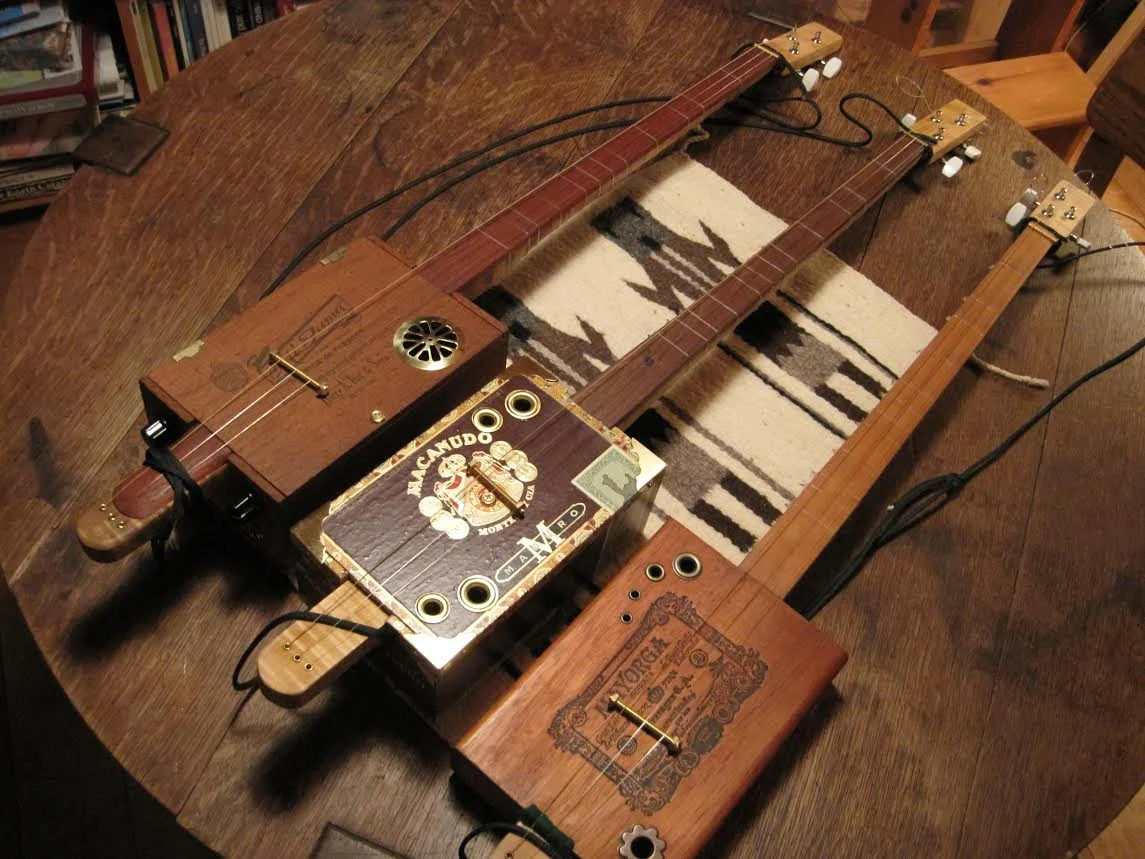
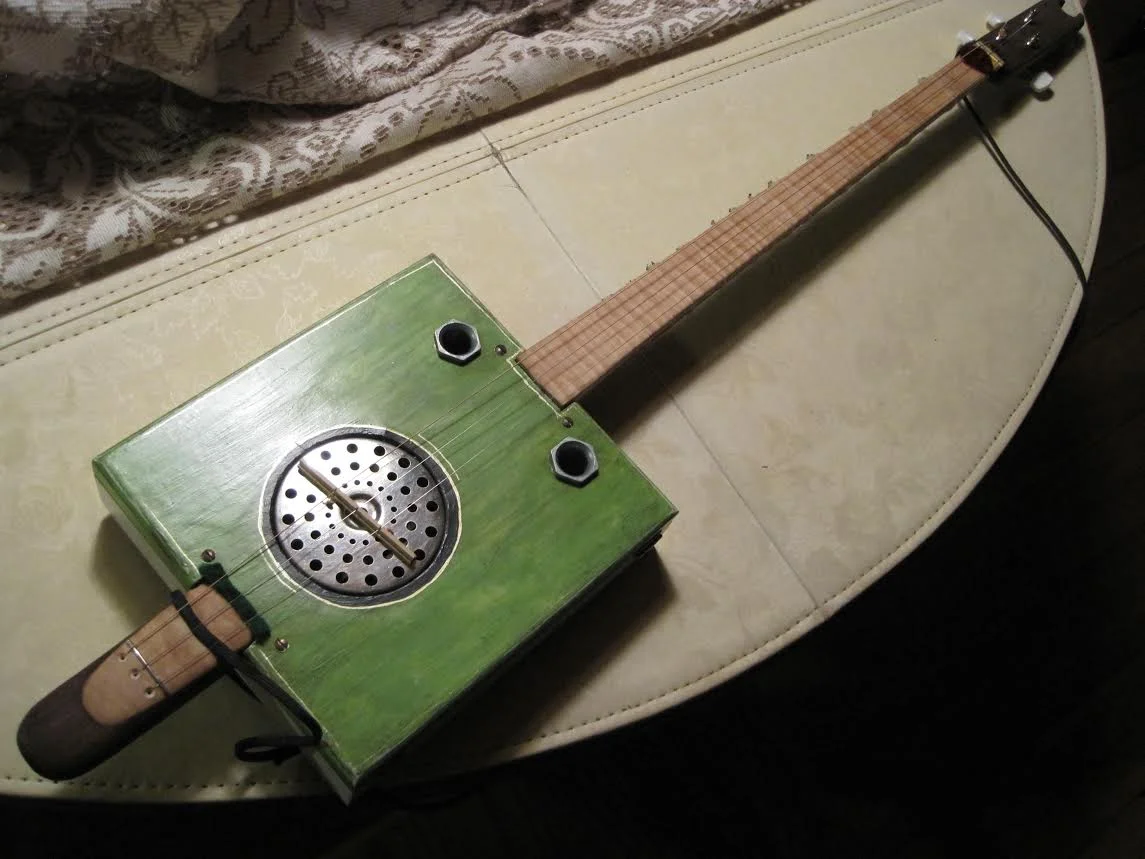
These cigar box guitars were built by local artist and Vernal Pool Band member, Ciro Lo Pinto, and are made of mostly local woods of Pennsylvania cherry, curly maple, black walnut with fret boards of various hardwoods. The frets were sometimes tied on in a traditional style first used on lutes. This is probably how the first fretted cigar box guitars were made. Standard fretting materials are used by Ciro. Most were originally played with a glass bottleneck slide.
Cigar box guitars are commonly tuned to an open G chord without the 3rd (G – D – g) and are fretted to a major scale. Which means all of the “bad frets” have been left off? The instrument can be strummed, picked, plucked, "frailed" and played with a slide or anything else you may have in mind. Ciro has been making cigar box guitars and banjoes for sale for several years now. See the gallery for other photos and videos of Ciro's instruments.
Enjoy yourself and be free
HOPI KACHINA DOLLS
The Hopi Indians are the westernmost of the pueblo peoples and live in twelve villages set on the three mesas in northeastern Arizona. As farmers, the Hopi are dependant on the weather for successful crops, and have been contending with the harsh, unpredictable weather patterns of the Southwest for over 20OO years. To grow crops, particularly corn, in their semiarid land the Hopis believe it is absolutely essential to have the supernaturals on their side. However, the Hopis do not approach their supernaturals as other cultures do. The Hopis feel that their supernaturals have certain powers which they do not have, and that the Hopi, in turn, possess things which their supernaturals desire. Thus, quite often, Hopi rituals are mutual gift-giving ceremonies. The supernaturals desire prayer feathers, corn pollen and various rituals, and the Hopis like rain, so this mutual exchange works out very well for both parties.
Hopi Kachinas are supernaturals, embodying the spirits of living things and also the spirits of ancestors who have died and become a part of nature. Kachinas are believed to possess powers over nature, especially the weather, but higher gods limit the extent of their powers.
To Hopis, it is essential to preserve harmony with the world around them, not only with humans and other animals but with objects in nature such as rocks, clouds, sky, etc., which the Hopis believe to be possessed of life. Since the Kachinas embody these spirits they are the spiritual guardians of the Hopi people and their way of life. And since they can ensure human, animal and plant fertility, they ensure life itself. Hopi men carve likenesses of the Kachinas from cottonwood root, and these are the well—known Katsina dolls of special interest to collectors.
In the yearly cycle of religious ceremonies, Kachina dances are preeminent. In the Hopi dances, the Kachinas are personated by Hopi men, age ten to eighty. The Hopis feel that when they impersonate a Kachina they become the supernatural. As the supernaturals they may cure disease, grow corn, bring clouds, watch over ceremonies and reinforce discipline and order in the Hopi world. Katsina doll carving has evolved into an elaborate art form, and the carvings themself range in styles from small, flat cradle dolls used to protect children, to full human-form carvings from a single block of wood, to stylized, free—form representations that symbolically represent the Kachina form. Ciro's mom is Hopi and he has been carving katsinas since the early 1980's, these are some of his carvings. All are available for purchase or can be special ordered.
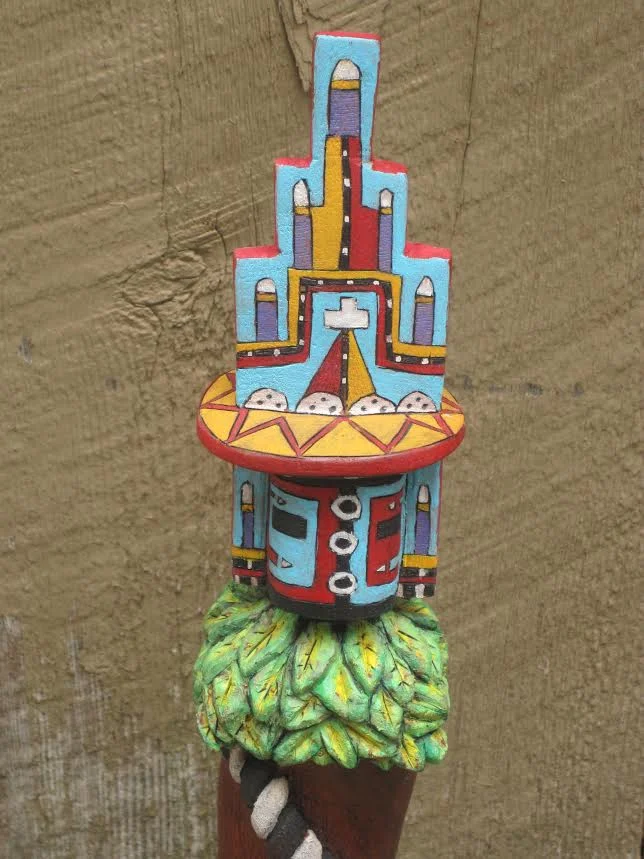
Hemis (harvest) Kachina
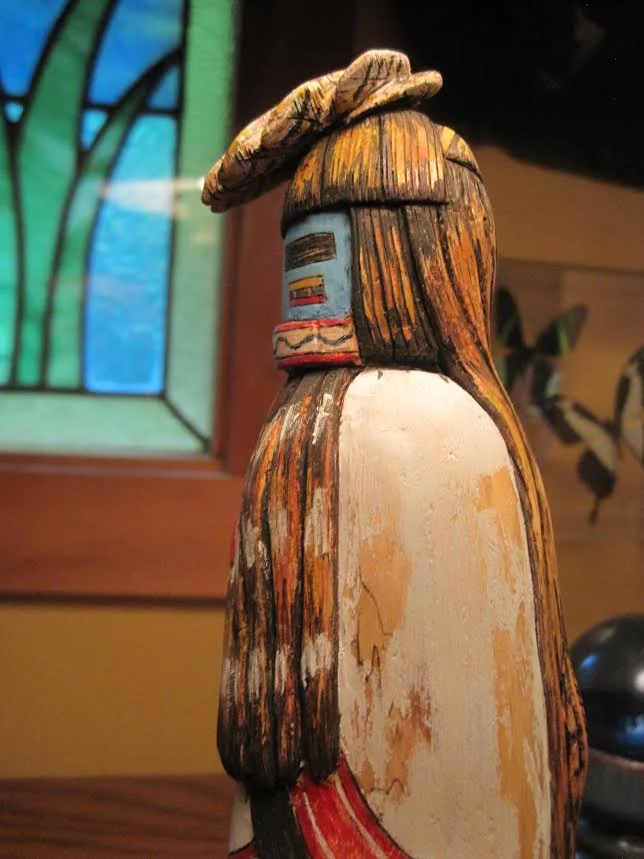
Warrior Maiden
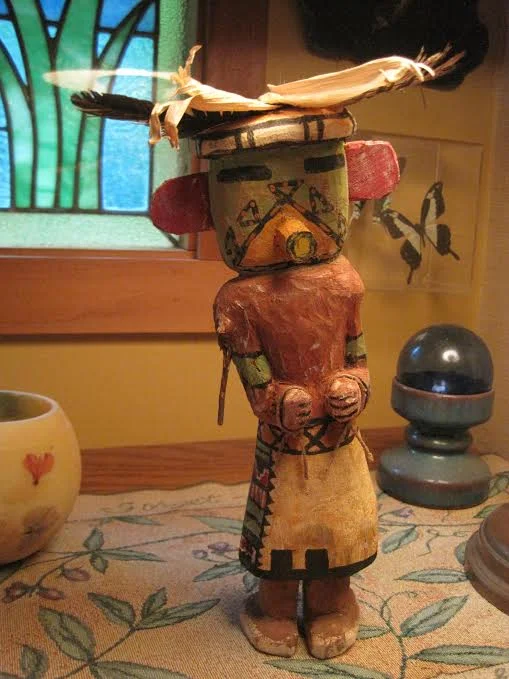
Corn Kachina
Ciro Lo Pinto
Rush Light
A rushlight is a type of candle or miniature torch formed by soaking the dried pith of the rush plant in fat or grease. For several centuries rushlights were a common source of artificial light for poor people throughout the British Isles. hopefully, Ciro's craft works can bring a little light into your life as well.
Liberty, PA
contact Ciro through the Vernal Pool band website or at (570) 324-2116